
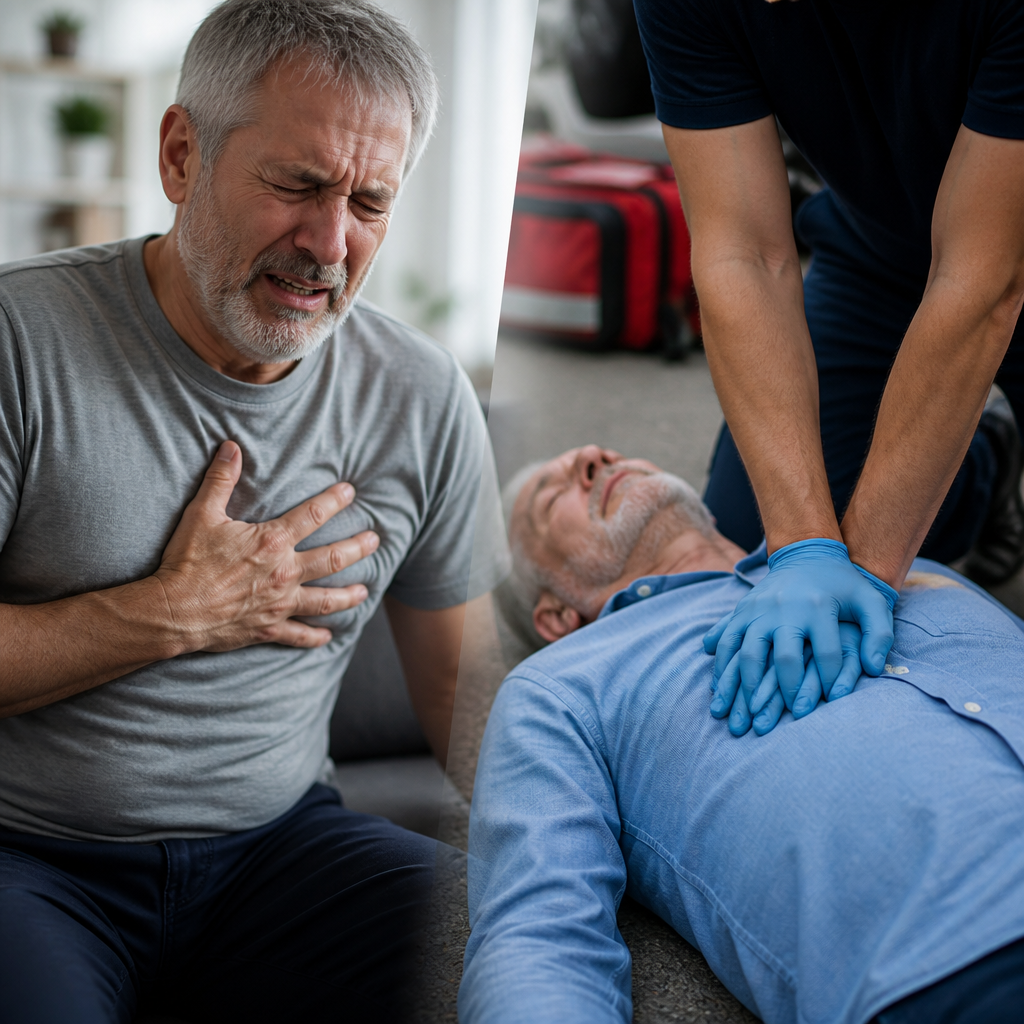
Every year, thousands of people lose precious minutes during a cardiac emergency because bystanders — and even patients themselves — confuse two very different conditions: cardiac arrest and heart attack. While both involve the heart and both can be fatal, they are distinct medical events with different causes, different warning signs, and critically different responses. Understanding the difference is not just academic knowledge — it can be the deciding factor between life and death.
Two Emergencies, One Organ: Why the Confusion Happens
The heart is a complex organ, and when something goes wrong with it, the consequences are immediate and severe. The confusion between cardiac arrest and heart attack stems largely from the fact that both events are dramatic, both involve chest-related distress, and both are frequently depicted interchangeably in popular media. Television dramas rarely pause to distinguish between a patient clutching their chest from a blocked artery versus one who has suddenly collapsed with no pulse. In real life, however, that distinction matters enormously.
A heart attack is fundamentally a circulation problem. A blockage — typically caused by a buildup of plaque in the coronary arteries — cuts off blood supply to part of the heart muscle. The heart continues to beat, but a section of it is being starved of oxygen. Cardiac arrest, on the other hand, is an electrical problem. The heart’s electrical system malfunctions, causing the heart to stop beating altogether. Blood flow to the brain and vital organs ceases within seconds.
Recognizing a Heart Attack: The Warning Signs
Heart attacks often — though not always — announce themselves with warning signs that can develop over minutes, hours, or even days. The classic presentation includes chest pain or pressure described as a squeezing, tightening, or heavy sensation in the center or left side of the chest. This discomfort may radiate to the left arm, jaw, neck, back, or stomach. Shortness of breath, cold sweats, nausea, and lightheadedness frequently accompany the chest pain.
Importantly, heart attacks in women often present differently. Women are more likely to experience atypical symptoms such as unusual fatigue, indigestion-like discomfort, or pain in the upper back and jaw — symptoms that are easier to dismiss or attribute to less serious causes. This is one reason heart attacks in women are more frequently misdiagnosed or delayed in treatment.
The Silent Heart Attack: A Hidden Danger
Not every heart attack announces itself loudly. Silent myocardial infarctions — heart attacks with no obvious symptoms — account for a significant portion of all cardiac events. These often go undetected until a routine electrocardiogram reveals evidence of past damage. People with diabetes are particularly susceptible to silent heart attacks due to nerve damage that blunts pain perception. This underscores the importance of regular cardiovascular check-ups, especially for those with known risk factors.
Recognizing Cardiac Arrest: When the Heart Stops
Cardiac arrest is sudden and, in most cases, without warning. The person collapses, becomes unresponsive, and stops breathing normally. There is no pulse. Unlike a heart attack, there is rarely time to deliberate — every second without intervention reduces survival chances by approximately 10 percent. Recognizing Cardiac arrest symptoms early is critical, as the window for effective intervention is extraordinarily narrow. Immediate CPR and the use of an automated external defibrillator (AED) are the two most effective responses before emergency services arrive.
It is worth noting that a heart attack can trigger cardiac arrest. When a large portion of the heart muscle is damaged by a blocked artery, it can disrupt the heart’s electrical system and lead to ventricular fibrillation — a chaotic, ineffective quivering of the heart chambers that constitutes cardiac arrest. This is why prompt treatment of a heart attack is also a form of cardiac arrest prevention.
What to Do in Each Emergency
If someone is experiencing a heart attack — conscious, breathing, and showing symptoms — call emergency services immediately, keep the person calm and still, and if they are not allergic and it is available, aspirin may be recommended by emergency dispatchers. Do not drive the person to the hospital yourself unless absolutely no other option exists.
If someone has gone into cardiac arrest — unconscious, not breathing, no pulse — call emergency services and begin CPR immediately. Push hard and fast on the center of the chest at a rate of 100 to 120 compressions per minute. If an AED is nearby, use it as soon as possible. These actions can double or even triple survival rates. Knowing where to seek the right level of medical care in an emergency can also make a critical difference in outcomes.
Risk Factors: Who Is Most Vulnerable?
Both conditions share several overlapping risk factors, including high blood pressure, high cholesterol, smoking, obesity, diabetes, and a sedentary lifestyle. A family history of heart disease significantly elevates risk for both. However, cardiac arrest has some additional triggers that differ from those of a typical heart attack, including inherited arrhythmia conditions such as long QT syndrome, Brugada syndrome, and hypertrophic cardiomyopathy. Young athletes who collapse during exercise are often victims of these less common but serious electrical disorders.
Mental health also plays a role in cardiovascular risk that is often underestimated. Chronic stress, anxiety, and depression have been linked to increased risk of both heart attack and cardiac events. Understanding the psychological dimensions of heart health is an evolving area of medicine. For those exploring the intersection of mental health and physical wellness, resources on managing clinical depression with digital health tools offer a useful starting point for addressing one of the lesser-discussed contributors to cardiac risk.
Cleveland Clinic Abu Dhabi: A Trusted Resource for Cardiac Health
When it comes to understanding and managing cardiac conditions, access to credible, medically reviewed information is essential. Cleveland Clinic Abu Dhabi provides patients and caregivers with a comprehensive health library that covers a wide range of cardiovascular conditions in clear, accessible language. Their resources are developed by specialists and reflect the same clinical standards that have made Cleveland Clinic a globally recognized name in cardiac care. Whether you are seeking to understand your own risk profile or trying to educate a loved one about emergency warning signs, their platform offers reliable guidance grounded in evidence-based medicine.
Conclusion: Knowledge Is the First Line of Defense
Cardiac arrest and heart attack are not interchangeable terms — they are two distinct emergencies that demand different responses. A heart attack is a blockage; cardiac arrest is a shutdown. One person may be conscious and in pain; the other may be completely unresponsive. Knowing the difference, recognizing the warning signs, and acting quickly and correctly can mean the difference between survival and tragedy. Public education on these distinctions is not a luxury — it is a public health necessity. The more people who understand these two conditions, the more lives can be saved before emergency responders ever arrive on scene.