
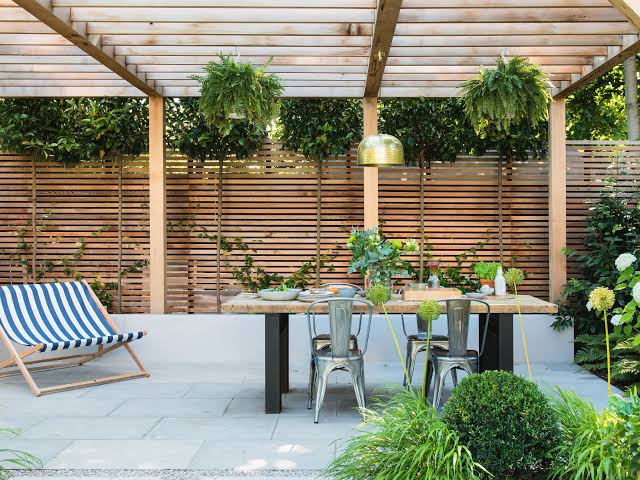
A patio can become difficult to use when direct sun heats the paving, furniture, and surrounding walls for hours. Building a permanent roof is not the only way to make the space more comfortable.
Hot patio spaces can often gain useful shade through umbrellas, movable screens, fabric canopies, container plants, and flexible furniture placement that changes with the sun.
Find Out When the Patio Is Hottest
Before buying shade equipment, observe where the sun comes from during the hours you actually use the patio. Morning heat, midday overhead sun, and low western afternoon sun require different solutions.
A table umbrella may work well near noon but provide little protection when late-day sunlight enters from the side. Marking the sunny and shaded areas at several times gives you a better picture of what needs covering.
Start With Shade You Can Move
Freestanding umbrellas are one of the simplest choices because they can be repositioned or stored when necessary. Cantilever designs can keep the support pole away from the center of a seating area, though the base must be suitable for the umbrella and local wind conditions.
People exploring outdoor home ideas may encounter elaborate patio makeovers, yet flexible shade often makes more sense for renters or homeowners who do not want structural work.
Consider Wind Before Choosing a Large Canopy
The larger the shade surface, the more attention wind deserves. Umbrellas and temporary canopies should be used according to their installation and weather guidance.
Retract or store movable shade when conditions make it unsafe to leave open.
Use Furniture Placement to Reduce Heat Exposure
Moving a dining table or lounge chair a few feet can sometimes place it within natural building shade during the hottest part of the afternoon.
Planning ideas from comfortable outdoor living can help shape the seating arrangement, but start with the sun path. Furniture positioned solely for appearance may sit in the hottest part of the patio at the exact time people want to use it.
| Shade Option | Main Advantage | Main Limitation |
|---|---|---|
| Market umbrella | Easy to reposition | Limited coverage |
| Cantilever umbrella | Clear space below | Needs stable base |
| Shade screen | Blocks low-angle sun | Direction-specific |
| Container planting | Adds natural screening | Takes time and care |
Add Side Shade for Afternoon Sun
Overhead coverage is not always enough. Low-angle sunlight from the west can reach beneath an umbrella and heat seating areas late in the day.
Outdoor screens, suitable curtains, movable panels, or tall container plants may provide targeted side protection. Design references centered on patio styling choices can help integrate those elements without making the area feel enclosed.
Plants can soften hard surfaces as well, although they should be selected for the light, heat, container size, and local climate.
Don’t Turn Temporary Shade Into a Wind Hazard
A lightweight solution is useful only when it remains stable. Oversized umbrellas with inadequate bases, unsecured fabric, and improvised panels can become difficult to control in strong gusts.
Another mistake is trying to shade every inch of the patio. Focus first on the seating or dining zone. A smaller shaded area that can be adjusted throughout the day may work better than a large temporary covering that is inconvenient to manage.
Frequently Asked Questions
What is the easiest way to shade a patio without construction?
A properly supported outdoor umbrella is often the simplest starting point. It requires little installation and can usually be repositioned as the sun changes.
How can I block hot afternoon sun from the side?
Movable screens, outdoor curtains designed for appropriate supports, tall container planting, or repositioned umbrellas can help with low-angle sunlight.
Will plants make a hot patio feel more comfortable?
They can provide localized shade and visual softness when they become large enough, but their effect depends on size and placement. Container plants also require watering and conditions suitable for their species.
Shade the Area You Actually Use
Watch the sun first and cover the places where people sit rather than treating the entire patio as one problem. Start with movable equipment, adjust the layout, and add side protection only where needed. Flexible shade makes it easier to adapt the patio through different seasons without committing to a permanent structure.