
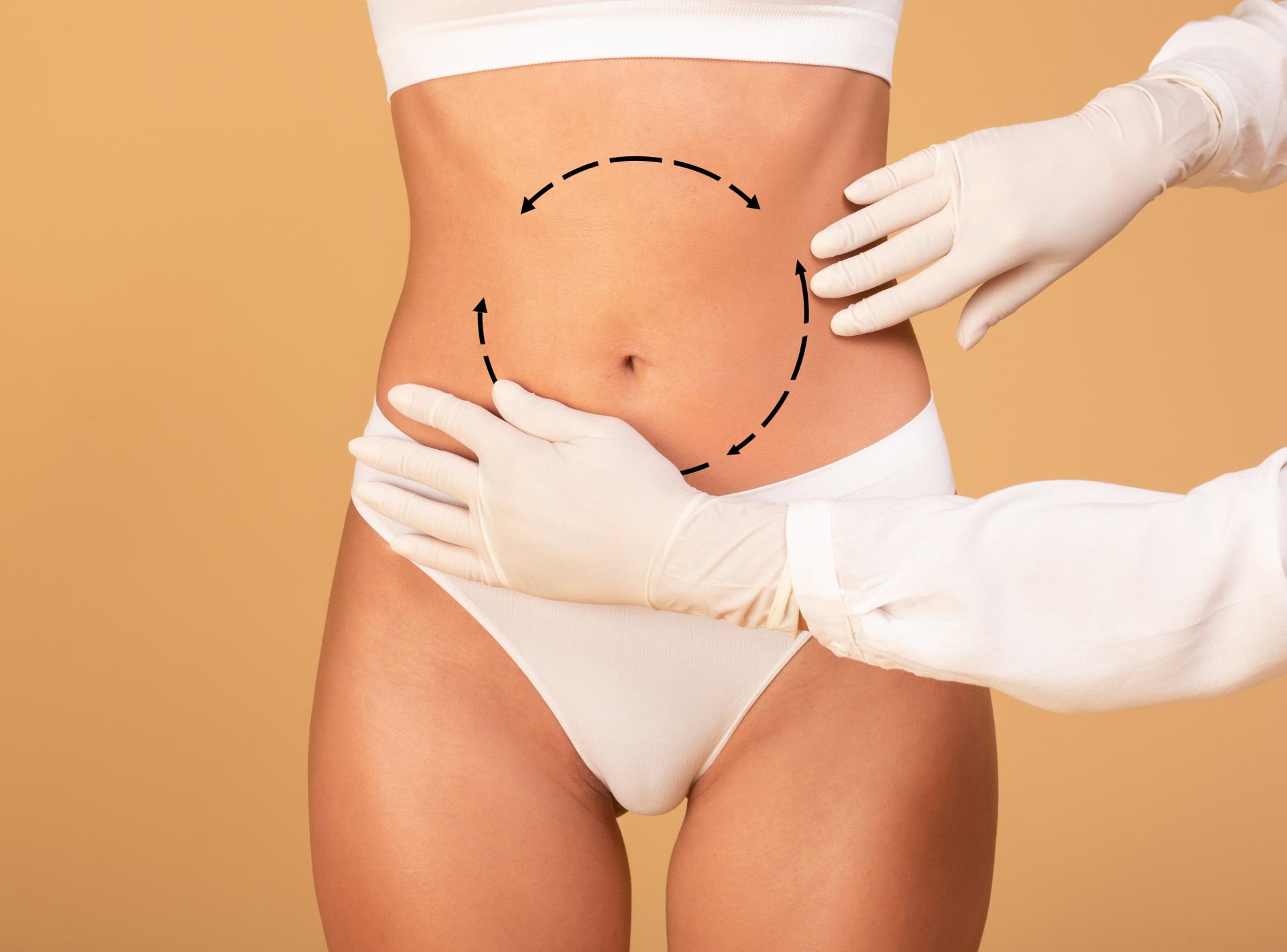
A tummy tuck isn’t over once the stitches are removed. The activities you engage in during the months and years after the operation determine whether that flat, tight belly remains that way or slowly shifts back to its original state. Instead of viewing it as a final product, consider it as a new responsibility you must now handle.
More than 148,000 abdominoplasties were conducted in the United States in 2022 alone, making it one of the most popular body contouring operations across the globe (American Society of Plastic Surgeons). With those statistics, many individuals are wondering about one to two years later: how can I maintain this?
The foundation is set on the operating table
Before we talk maintenance let’s get something over with that surgeons don’t always come right out and say: no amount of post-op discipline can fix a substandard muscle repair or a wavy, drift-prone skin closing. Nothing can make a poorly executed surgery last. The single most predictive factor of the longevity of your repair is the quality of your surgeon’s construction in the operating room.
A thorough abdominoplasty involves more than removing loose skin. The surgeon needs to correctly identify and repair diastasis recti – the separation of the abdominal muscles – and stitch the muscle wall back into a stable, midline position. This plication is what actually gives you the flat contour, not the skin removal. If that repair is done well, by a surgeon with real experience in abdominoplasty surgery in Sydney or wherever you’re being treated, it creates the anatomical foundation everything else in this article builds on. Skip that step or rush it, and you’re maintaining a result that was never structurally sound to begin with.
This matters because patients sometimes blame themselves for “losing” results that were compromised from day one. Ask your surgeon direct questions about their approach to muscle repair before you book anything.
The first year: scars and core rebuilding
Once you’re past the initial recovery weeks, the next twelve to eighteen months are where the real shaping happens – not through more surgery, but through biology.
Your scar isn’t finished healing just because the wound has closed. Scar tissue continues to remodel for a year to eighteen months, gradually fading from red or purple to a flatter, paler line. What you do during this window has an outsized effect on the final result. Daily use of silicone gel or sheets, gentle massage once cleared by your surgeon, and strict SPF 50+ protection whenever the area is exposed to sun are non-negotiable if you want a scar that’s easy to ignore rather than one that thickens or darkens permanently. Skip the sun protection for a single summer and you can undo months of careful scar management.
The muscle plication your surgeon performed needs support, not stress, in the early months. Once you have full clearance – usually somewhere between six and twelve weeks, depending on your recovery – progressive core training becomes one of the most useful things you can do. The goal isn’t crunches. It’s targeted work on the transversus abdominis, the deep stabilizing muscle that wraps around your midsection like a corset. Strengthening this muscle helps hold the repaired abdominal wall in its new position and reduces the chance of the lower abdomen “pooching” again over time.
Go slowly here. Jumping into heavy ab work too early can strain the repair before it’s fully matured. Work with a physiotherapist familiar with post-surgical recovery if you can. It’s worth the cost.
Compression doesn’t stop at week six
Most patients wear compression garments religiously in the first few weeks, then abandon them the moment they’re “allowed” to. That’s a mistake. Wearing a garment during exercise for the remainder of the first year helps reduce swelling and gives the tissue extra support while it’s still settling into its final shape. It’s a small habit that pays off disproportionately.
Weight stability is the single biggest factor
The most important rule of all is this: do your best to maintain a stable weight. In fact, many surgeons recommend that you stay within about 4-5 kg of your post-surgery weight for the rest of your life.
Why does it matter so much? While a tummy tuck removes loose skin and tightens the skin that remains, the fact is that skin still has a limit to how much it can stretch. Gain a significant amount of weight and that newly taut skin will stretch out, often right along with your old stretch marks. Lose a lot of weight too quickly and you may find yourself dealing with a whole new set of problems. Skin doesn’t always shrink uniformly, and in many patients, a large amount of newly loose skin is even more of a problem than the fat they started with.
This issue is particularly important if your surgeon combined liposuction with your tummy tuck, as many do. Liposuction eliminates fat cells from a specific area, but if you put on weight, the fat cells that remain in other parts of your body will still expand. This is not a symmetrical process, and it can lead to an asymmetry that causes your result to look less than perfect at best, and downright botched at worst. Staying at a stable, healthy BMI level is not just random advice about being healthy. It is a fundamental requirement for maintaining the look you invested in.
Pregnancy changes the calculation entirely
If you’re considering having children within a year or two of your tummy tuck, you’re likely better off waiting until you’re through having babies. Pregnancy stretches the abdominal wall as the uterus expands, and that stretching can partially or fully reverse the muscle plication your surgeon performed. It can also affect the skin that was tightened, sometimes requiring a revision procedure afterward.
None of this means you shouldn’t have a tummy tuck if you’re planning future pregnancies. It means you should have an honest conversation with your surgeon about timing before you commit to the procedure. Many surgeons recommend waiting until you’re done having children, precisely because the abdominal wall and skin have to go through the whole stretching-and-recovering process again either way.
Everyday habits that quietly erode results
There are a few basic lifestyle factors that are not discussed often enough – probably because they’re unglamorous, and also because there’s relatively little money to be made off them. They’ll influence your result more than anything else we’ve listed, though.
Smoking is the ultimate accelerator of skin laxity (plus about a million other terrible things). It’s the first thing most surgeons tell their abdominoplasty patients to quit, and the second biggest reason, after genetics, that their patients will be back for a second tummy tuck. Likewise, heavy alcohol use is the long-term enemy of collagen synthesis and skin hydration.
Then there’s nutrition. Nothing you eat is going to directly tighten your skin, but firmness is mediated by collagen, and collagen is mediated by protein, vitamin C, and zinc, while your overall skin health is mediated by water – so load up on all four after surgery if for no other reason than it can’t hurt. A good diet can definitely help support the work you’ve had done.
Genetics still have the final say to some degree. Skin elasticity varies from person to person based on collagen and elastin quality, and that affects how well your results hold up as you age regardless of how carefully you follow every other piece of advice here. You can’t control that variable, but you can control everything else on this list, which is where your effort is best spent.
Non-surgical maintenance in the later years
Surgery gives you a reset point. It doesn’t pause the aging process. Years after your tummy tuck, gravity and natural collagen decline will still act on your skin the same way they act on everyone else’s.
This is where non-surgical treatments earn their place. Radiofrequency and ultrasound-based skin tightening treatments can help maintain firmness as a maintenance layer, addressing mild laxity before it becomes significant enough to consider a revision. These aren’t replacements for the original surgery. They’re tools to extend its lifespan, and they work best when started before visible sagging sets in rather than after.
Why annual follow-ups matter more than patients think
Many patients think once their surgery is over, they never have to see that doctor again. The truth is quite the opposite, especially with an elective procedure like a tummy tuck. You don’t need to see your surgeon monthly, but meeting at least once a year to poke around the repair and make sure everything still feels tight is a highly recommended habit.
Seroma, a buildup of fluid under the skin, is a good example of why this matters. It can occur as a late complication and, left unmonitored, can distort the abdominal contour in a way that’s harder to correct the longer it goes untreated. A quick annual check catches this kind of thing early. It’s a five-minute conversation that can save you a much bigger problem down the line.
Setting expectations that actually hold up
Long-lasting is not the same as forever, and physicians who relay this information are usually the most satisfied with their long-term results. A tummy tuck removes excess skin, repairs muscle that has separated and weakened, and produces a flatter, tighter abdominal physique that simply would not be possible through diet and exercise. Your body, however, does not cease to age, and it does not cease to react to its environment. Patients who realize this and understand that maintenance will be an ongoing relationship with their physician are the ones who still look good five or ten years post-op. The surgery gives you an advantage. What you choose to do next determines how long that lasts.
Treat the months and years after surgery with the same seriousness you gave the decision to have it done in the first place, and there’s no reason your result shouldn’t hold up for the long haul.