
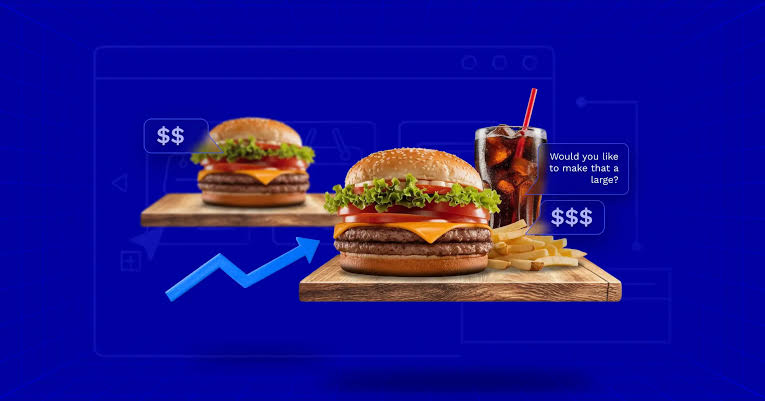
Weak upselling results often come from showing customers more products instead of showing them more relevant products. A random higher-priced suggestion rarely feels helpful, especially when it interrupts checkout or ignores what the shopper is already buying.
Effective upselling starts with fit. The recommendation should improve, extend, protect, or logically upgrade the original purchase while keeping the customer’s actual goal in view.
Understand the Difference Between Upselling and Noise
Upselling typically encourages a better or higher-value version of the item a customer is considering. Cross-selling introduces a related product that complements it.
Problems begin when stores treat every recommendation as interchangeable. A shopper buying an inexpensive item may not want a premium package costing several times more.
Recommendations should make immediate sense. Customers shouldn’t need a paragraph explaining why the second product is connected to the first.
Base Recommendations on the Original Purchase
Look at compatibility, customer use cases, price difference, product category, and previous purchasing patterns. A recommendation works better when the customer can understand its benefit quickly.
Merchants exploring profit-focused planning should judge upsells by profitable order improvement rather than acceptance rate alone. An offer with high returns or support costs may create less value than it appears to generate.
For example, recommend a larger storage capacity to someone already comparing device storage options, rather than offering an unrelated premium accessory.
Keep the Price Jump Reasonable
A dramatically more expensive alternative can feel disconnected from the shopper’s budget. Test recommendations that represent a logical next step rather than the most expensive item available.
Relevant recommendations preserve trust even when the customer declines them.
Place Offers at the Right Moment
Product pages, carts, and post-purchase screens serve different purposes. An upgrade belongs earlier in the decision process, while a simple complementary item may work better after the main choice has been made.
Ideas around retail growth ideas become more useful when they account for customer experience as well as revenue. Too many pop-ups and repeated offers can make checkout feel like an obstacle course.
Limit the number of choices. One strong recommendation often gives the customer a clearer decision than six weak ones.
| Upsell Problem | Customer Experience | Better Choice |
|---|---|---|
| Unrelated offer | Feels random | Match the main product |
| Huge price jump | Feels unrealistic | Offer logical upgrade |
| Too many options | Creates hesitation | Limit recommendations |
| Late upgrade prompt | Interrupts checkout | Place earlier |
Measure Profit, Not Only Extra Revenue
An upsell can increase average order value while contributing little additional profit. Discounts, shipping weight, payment fees, returns, and support requirements all affect the result.
Using contribution margin thinking can help keep attention on what remains after variable costs rather than celebrating a larger order total by itself.
Compare accepted upsells with returns and cancellations. A recommendation that customers frequently regret may need better positioning or should be removed.
Where Upselling Strategies Commonly Go Wrong
Stores often recommend their highest-margin products regardless of relevance. That approach can make the recommendation system feel self-serving.
Another mistake is hiding the difference between the original product and the suggested upgrade. Customers need a clear reason to spend more, such as additional capacity, longer useful life, more features, or better suitability for their needs.
Constant discounting also weakens the strategy. If every upsell requires a large discount, the underlying recommendation may not be strong enough.
Frequently Asked Questions
What makes a good ecommerce upsell?
A good upsell offers a clearly relevant improvement to the product a shopper already wants. The benefit and price difference should be easy to understand.
Where should upsell offers appear?
Placement depends on the offer. Product upgrades often fit naturally on product pages or carts, while simple complementary offers may work after the main purchase decision.
Can too many upsells hurt conversion?
Yes. Excessive recommendations can distract customers, create decision fatigue, or interrupt checkout. Testing a smaller number of closely matched offers can provide a cleaner experience.
Recommend the Next Logical Choice
Better upselling isn’t about pushing every customer toward the largest possible order. It’s about recognizing the purchase they’re already trying to make and presenting one useful step beyond it.
Review existing offers for relevance, compatibility, price difference, and profitability. Remove recommendations that exist only because space is available. When an upgrade genuinely fits the customer’s goal, the added sale feels less like a sales tactic and more like a sensible option.