
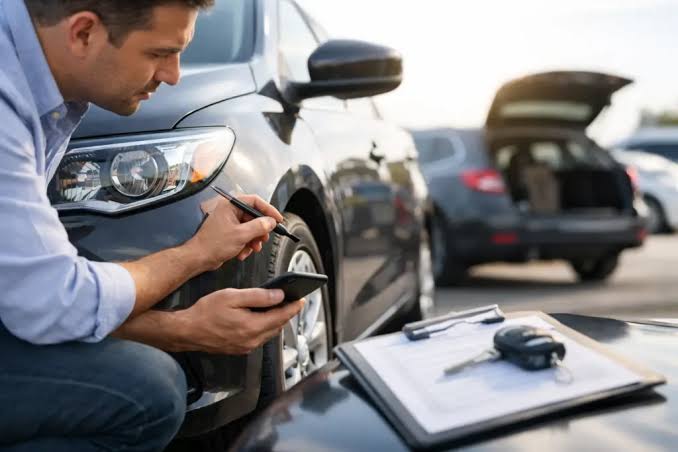
A rental car should be inspected before you leave the pickup area, not after you reach your hotel. Existing scratches, wheel damage, warning lights, low fuel, weak tires, or missing equipment are easier to document while you are still at the rental location. A short inspection also gives you time to learn unfamiliar controls before joining traffic.
Record Existing Damage Before Driving Away
Walk around the vehicle slowly and photograph each side, including bumpers, wheels, mirrors, glass, and obvious scratches or dents. Make sure existing damage is listed on the rental agreement or acknowledged through the company’s normal check-out process.
Drivers reviewing rental-car driving tips should also inspect the interior. Photograph unusual stains, tears, warning messages, or damaged controls before leaving the lot.
Check the Fuel or Battery Level
Confirm whether the rental must be returned full, at the same fuel level, or under another arrangement. For an electric vehicle, understand the expected return charge level and available charging options.
A quick check can prevent confusion when the vehicle is returned.
Test Basic Safety Equipment
Before moving, confirm that headlights, brake lights, turn signals, wipers, mirrors, seat belts, and climate controls appear to work normally. Look at the tires for obvious damage or unusually low pressure.
People using automotive research directories may be familiar with many vehicle features, but rental models often use different control layouts. Find the lights, wipers, hazard switch, parking brake, gear selector, and fuel-door release before entering busy traffic.
| Rental Check | What to Verify | Reason |
|---|---|---|
| Exterior | Existing scratches or dents | Prevent later disputes |
| Tires | Visible damage or low pressure | Improve road safety |
| Fuel/charge | Starting level | Match return terms |
| Controls | Lights, wipers, hazards | Avoid confusion later |
Understand the Car Before the Trip Starts
Adjust the seat, steering wheel, mirrors, navigation, and climate controls while parked. Connect your phone only if needed, and remove personal data from the system before returning the car.
General trip planning material can support scheduling and logistics, but leave a few extra minutes for the rental pickup itself. Rushing directly from the counter onto an unfamiliar highway is an avoidable source of stress.
If a warning light remains illuminated or the vehicle feels unsafe during the first few minutes, return to the rental location or contact the company according to the agreement rather than hoping the problem disappears.
Rental Mistakes That Can Become Expensive
Skipping the initial photo inspection is one of the easiest mistakes to avoid. Memory is not good evidence several days later, while time-stamped photos can provide a clearer record of the vehicle’s condition at pickup.
Another mistake is ignoring the return terms until the final hour. Fuel rules, toll procedures, mileage restrictions, return location requirements, and late-return policies can affect the final charge. Read the important sections before the trip starts, not in the return lane.
Frequently Asked Questions
Should I photograph a rental car even if the employee already inspected it?
Yes. Your own photos provide a personal record of the vehicle’s condition at pickup. Capture all sides, wheels, glass, interior damage, and the dashboard showing mileage and fuel or charge level.
What should I do if a warning light appears before leaving?
Do not ignore it. Ask the rental company to explain the warning and, if necessary, provide another vehicle. Starting a trip with an unresolved warning can create avoidable safety and reliability problems.
Should I check the spare tire in a rental car?
If the vehicle carries a spare, confirm that it appears present along with any supplied tools. Some modern vehicles use repair kits instead, so knowing what equipment is available before a roadside problem can save time.
Start the Rental With a Clear Record
A careful pickup inspection takes only a few minutes and gives you a cleaner starting point for the trip. Document existing damage, confirm fuel or charge level, check tires and lights, learn the main controls, and understand the return terms. The goal is simple: leave the lot knowing both the vehicle’s condition and your responsibilities.