
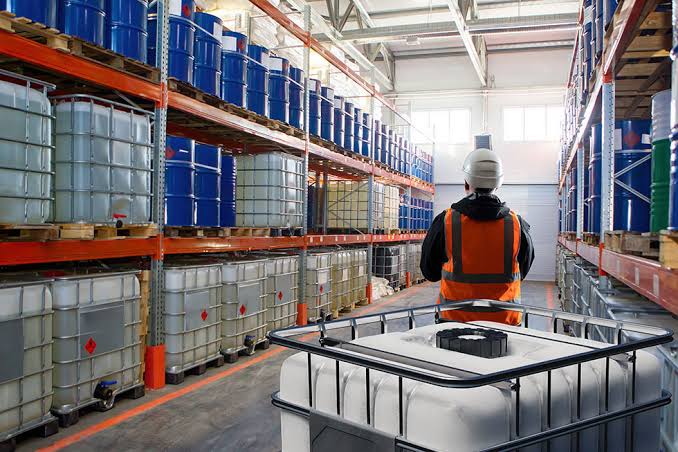
Chemical storage problems are easier to prevent before drums, tanks, bottles, cylinders, or bulk containers arrive on site. Storage decisions can affect worker safety, emergency planning, fire protection, environmental compliance, labeling, spill control, and reporting duties.
The correct requirements depend on the chemical, quantity, container, facility, location, and governing regulations. A generic storeroom policy is rarely enough for every substance.
Build an Accurate Chemical Inventory First
A facility needs to know what chemicals it actually possesses. Product names alone may not reveal all hazards, so current safety data sheets and reliable inventory records are important starting points.
Federal reporting obligations can apply to certain facilities and chemicals. EPA’s current EPCRA chemical inventory guidance explains reporting under Sections 311 and 312, including information concerning hazardous chemicals stored or used at covered facilities.
Inventory records should be updated as materials enter, move within, or leave the facility.
Match Storage Controls to the Actual Hazard
Chemical compatibility matters. Materials that are safe in separate containers can create serious problems if a leak allows incompatible substances to mix.
Preliminary legal research websites may help managers identify regulatory topics, but storage decisions should be based on current safety documentation, applicable codes, agency requirements, and competent professional guidance.
Storage areas may also require attention to ventilation, temperature, ignition sources, container condition, secondary containment, access control, and emergency equipment.
| Storage Question | Possible Problem | Better Practice |
|---|---|---|
| Are labels readable? | Misidentification | Replace damaged labels |
| Are containers compatible? | Reaction risk | Segregate hazards |
| Are leaks contained? | Spread of material | Maintain containment |
| Is inventory current? | Reporting gaps | Reconcile records |
Prepare for Inspections and Emergencies
Written records become especially important when several departments handle chemicals. Purchasing, operations, maintenance, safety personnel, and emergency coordinators should not maintain conflicting inventories.
General material from regional information outlets may illustrate chemical incidents elsewhere, but another facility’s circumstances should not determine local storage procedures.
The same caution applies to local publishing resources. Incident reporting can highlight consequences while site-specific safety data, fire codes, regulations, and emergency plans determine what a particular operation needs.
Storage Shortcuts That Create Bigger Problems
One common mistake is keeping chemicals wherever empty space is available. Convenience does not account for incompatibility, fire protection, spill pathways, ventilation, or emergency access.
Unmarked secondary containers are another source of confusion. Employees may know what a container holds today, but that informal knowledge can disappear between shifts.
Facilities should also avoid allowing outdated, unidentified, or unwanted chemicals to accumulate indefinitely. Old stock can create additional storage, inspection, and disposal complications.
When Expert Assistance Is Appropriate
Professional assistance may be needed when a facility handles large quantities, highly hazardous substances, unusual chemical combinations, bulk tanks, regulated wastes, repeated spills, fire-code concerns, or uncertain reporting obligations.
Safety professionals, environmental consultants, fire officials, and regulatory agencies can address different parts of the problem. Legal counsel may be appropriate when an enforcement action, reportable incident, permit dispute, or substantial compliance uncertainty exists.
Frequently Asked Questions
Can different chemicals be stored together if every container is closed?
Not necessarily. Compatibility and storage requirements depend on the substances involved. Closed containers do not eliminate the consequences of leaks, fires, damaged packaging, or accidental mixing.
How often should a chemical inventory be checked?
The appropriate schedule depends on facility operations and regulatory requirements, but inventories should remain current enough to reflect chemicals entering, leaving, or moving within the site.
Are safety data sheets enough for chemical-storage compliance?
No. Safety data sheets are important sources of hazard information, but facilities may also face fire, occupational safety, environmental, emergency planning, building, and other requirements.
Make Storage Rules Part of Operations
Chemical management should be designed before routine operations make unsafe habits difficult to correct. Identify every chemical, maintain current documentation, separate incompatible materials, establish storage locations, prepare for spills, and verify applicable reporting duties.
A controlled system is easier to inspect, easier to train employees on, and far easier to defend than storage practices built around convenience.
This article provides general information and is not a substitute for legal, environmental, or workplace-safety advice for a specific facility.