
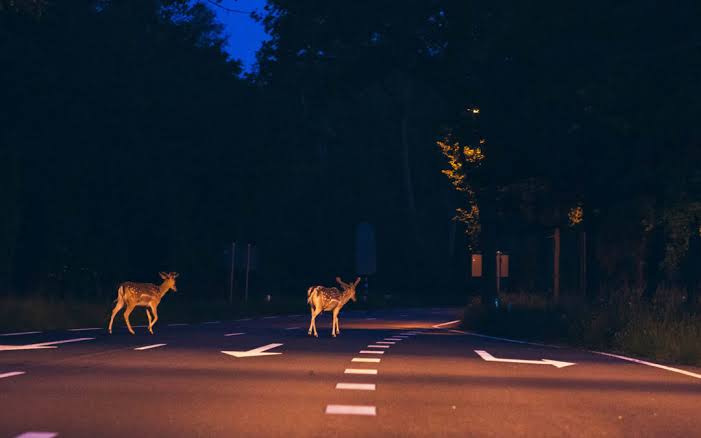
A deer can enter the roadway with almost no warning, particularly around wooded areas, open fields, and routes where wildlife regularly crosses. Visibility becomes even more challenging around dawn, dusk, and darkness.
Reducing speed, scanning both road edges, and leaving more stopping distance gives drivers more time to respond to deer crossing risks without making a dangerous last-second maneuver.
Scan Beyond the Headlights’ Center
Drivers naturally focus on the lane ahead, but wildlife often appears first near the shoulder. Regularly moving your visual attention between the roadway and its edges can reveal movement earlier.
Reflective eyes may be visible at night before the animal’s body becomes clear. Roadside wildlife-warning signs also indicate areas where previous animal activity has been significant enough to justify extra attention.
Readers browsing general vehicle material such as Turbo Fleet Tech topics may encounter many driving discussions, but no article can replace continuous observation on a dark rural road.
Slow Down Before Visibility Becomes Limited
Speed determines how much distance a vehicle travels before the driver can react. On dark or unfamiliar roads, reducing speed provides more time to identify an animal and stop without a violent steering correction.
Use high beams where legal and appropriate when there is no oncoming traffic, then dim them when necessary to avoid affecting other drivers.
A clean windshield and properly aimed headlights also make roadside movement easier to detect.
Treat One Deer as a Warning
Deer often travel in groups. Seeing one animal cross does not mean the road is immediately clear.
Reduce speed and continue scanning both sides before accelerating again.
Brake Firmly While Maintaining Direction
If a deer enters the lane and there is enough distance, controlled braking is usually more predictable than a sudden swerve.
Swerving can send the vehicle into opposing traffic, a tree, a ditch, a barrier, or another roadside hazard that may be more dangerous than the animal itself.
Road-safety browsing might include Peak Route Care resources, yet an emergency decision should remain based on lane position, surrounding traffic, speed, and the space actually available.
| Road Situation | Better Habit | Reason |
|---|---|---|
| Dawn or dusk | Reduce speed | Wildlife activity may increase |
| Wooded roadside | Scan edges | Animals may emerge suddenly |
| One deer crosses | Keep slowing | More may follow |
| Deer in lane | Brake while staying controlled | Avoid dangerous swerves |
Keep the Vehicle Ready for Sudden Stops
Good tires, working brakes, clean lights, and a clear windshield all improve the driver’s ability to respond when an animal appears unexpectedly.
A person researching tire-related topics may encounter Prime Tire Park material, but actual tire pressure, tread condition, and vehicle maintenance need to be checked directly.
Extra following distance also matters. If the vehicle ahead suddenly brakes for wildlife, closely following drivers need enough room to stop without creating a rear-end collision.
Common Reactions That Increase Risk
The instinct to jerk the steering wheel away from an animal can be powerful. Unfortunately, a sudden swerve at road speed may cause the driver to leave the lane or lose control.
Another mistake is accelerating immediately after one deer clears the roadway. A second animal may be only a few seconds behind.
Drivers should also avoid staring directly at an animal while forgetting the rest of the traffic environment. Continue tracking lane position, approaching vehicles, pedestrians, barriers, and any safe escape space.
Frequently Asked Questions
When are deer most difficult to see?
Low-light conditions such as dawn, dusk, and nighttime can make deer harder to detect because contrast is reduced and roadside areas may remain dark even when the road itself is illuminated.
Should you honk if a deer is near the road?
A brief horn may alert an animal in some situations, but its reaction is unpredictable. The driver’s primary response should still be reducing speed and preparing to stop.
What should you do after hitting a deer?
Move the vehicle out of active traffic if it can be done safely, activate hazard lights, and contact the appropriate emergency or local authorities when necessary. Avoid approaching an injured animal because frightened wildlife can behave unpredictably.
Create Time Before You Need It
Drivers cannot control when wildlife enters the roadway, but they can control speed, attention, following distance, and vehicle condition.
Watch the shoulders in low light, treat wildlife-warning areas seriously, and resist abrupt swerving when an animal appears. The safest reaction often begins several seconds before the deer ever reaches the lane.