
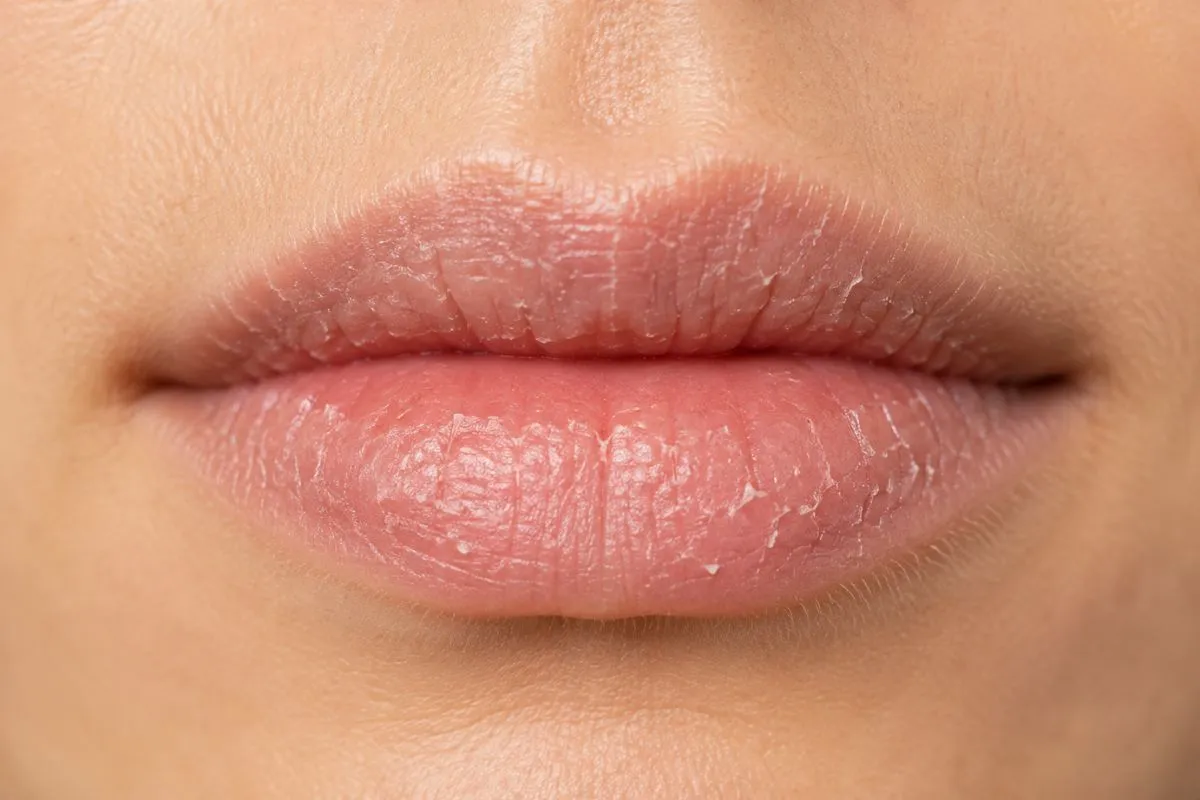
Frequent lip dryness is often made worse by dry weather, sun exposure, lip licking, irritating products, or repeated loss of surface moisture. A simple protective routine usually works better than constantly exfoliating flaky skin. Choose mild products, protect the lips outdoors, and avoid habits that keep reopening cracks.
Why Lips Dry Out So Easily
Lip skin has less of the protective barrier found on many other areas of the body, so environmental exposure can become noticeable quickly. Wind, cold air, low humidity, sun, and frequent licking can all contribute.
Some lip products also cause burning or stinging because of irritating ingredients. Discomfort shouldn’t automatically be interpreted as proof that a product is “working.”
Use a Simple Protective Balm
A bland, non-irritating balm or ointment can slow moisture loss and protect cracked areas while they recover. Petroleum jelly is one commonly used option because it forms a protective barrier.
Readers of general physical wellness topics may encounter long lists of ingredients advertised for dry skin. With sensitive lips, simpler formulas are often easier to tolerate than highly flavored, fragranced, or tingling products.
The American Academy of Dermatology recommends non-irritating lip products and sun protection and advises avoiding habits such as licking and picking at chapped lips. American Academy of Dermatology chapped-lip guidance
Stop the Lick-and-Dry Cycle
Licking feels soothing for a moment because it wets the surface. But as saliva evaporates, lips can feel dry again, encouraging another lick and continuing the cycle.
General personal-care safety information may focus heavily on products, yet behavior can matter just as much. Keeping a bland balm nearby gives you something protective to apply when you notice the urge to lick or pick.
| Common Trigger | What It Can Do | Better Habit |
|---|---|---|
| Lip licking | Worsen dryness | Apply plain balm |
| Picking flakes | Reopen cracks | Let skin heal |
| Irritating flavors | Cause stinging | Choose bland products |
| Sun exposure | Damage lip skin | Use SPF lip protection |
Protect Lips From Weather and Sun
Cold air and wind can increase moisture loss, while sunlight can damage exposed lip skin. An appropriate lip balm with broad-spectrum sun protection is useful outdoors, particularly during prolonged exposure.
Broader daily vitality reading often emphasizes hydration, and adequate fluid intake is sensible for general health. Still, repeatedly chapped lips are not always a simple sign that you need to drink more water. Irritation, weather, sun exposure, medications, allergies, and skin conditions can also contribute.
Using a humidifier may help when indoor air is particularly dry, especially during heating season.
Where Dry-Lip Care Often Backfires
Scrubbing flaky lips aggressively can create tiny injuries and make already irritated skin sting more. Picking loose pieces of skin can have the same effect.
Another mistake is repeatedly applying a balm that burns, tingles, or tastes strongly flavored because the sensation seems medicinal. If a product consistently causes discomfort, switching to a simpler formula is usually more sensible than continuing to challenge irritated skin.
When Persistent Dryness Needs Medical Attention
See a dermatologist or other qualified clinician if lip dryness persists despite consistent gentle care, becomes progressively worse, or produces recurrent bleeding, swelling, sores, significant pain, or a persistent rough or scaly area.
Chronic lip changes can sometimes reflect allergic reactions, infection, inflammatory skin conditions, medication effects, or sun-related damage. A persistent scaly patch, particularly after substantial sun exposure, deserves proper examination rather than repeated home exfoliation.
Frequently Asked Questions
Is petroleum jelly good for dry lips?
It can be useful because it forms an occlusive layer that slows moisture loss. Applying it to comfortable, non-irritated lips or over a suitable moisturizer can help protect the surface.
Why do my lips get drier after licking them?
Saliva briefly wets the lips, but evaporation can leave them feeling dry again. Repeated licking also exposes the skin to enzymes and mechanical irritation, which may worsen chapping.
Should I exfoliate chapped lips?
Aggressive exfoliation is usually unnecessary when lips are cracked or irritated. Protecting the surface and allowing damaged skin to shed naturally generally creates less trauma than repeated scrubbing.
Protect the Barrier and Give It Time
Frequent lip dryness usually responds best to consistent protection: use a mild balm, stop licking and picking, reduce exposure to irritating products, and protect the lips from sun and harsh weather.
If the problem refuses to improve or one area stays persistently rough, painful, bleeding, or scaly, have it examined rather than continually changing balms.
This article is for general informational purposes and is not a substitute for professional medical advice, diagnosis, or treatment.