
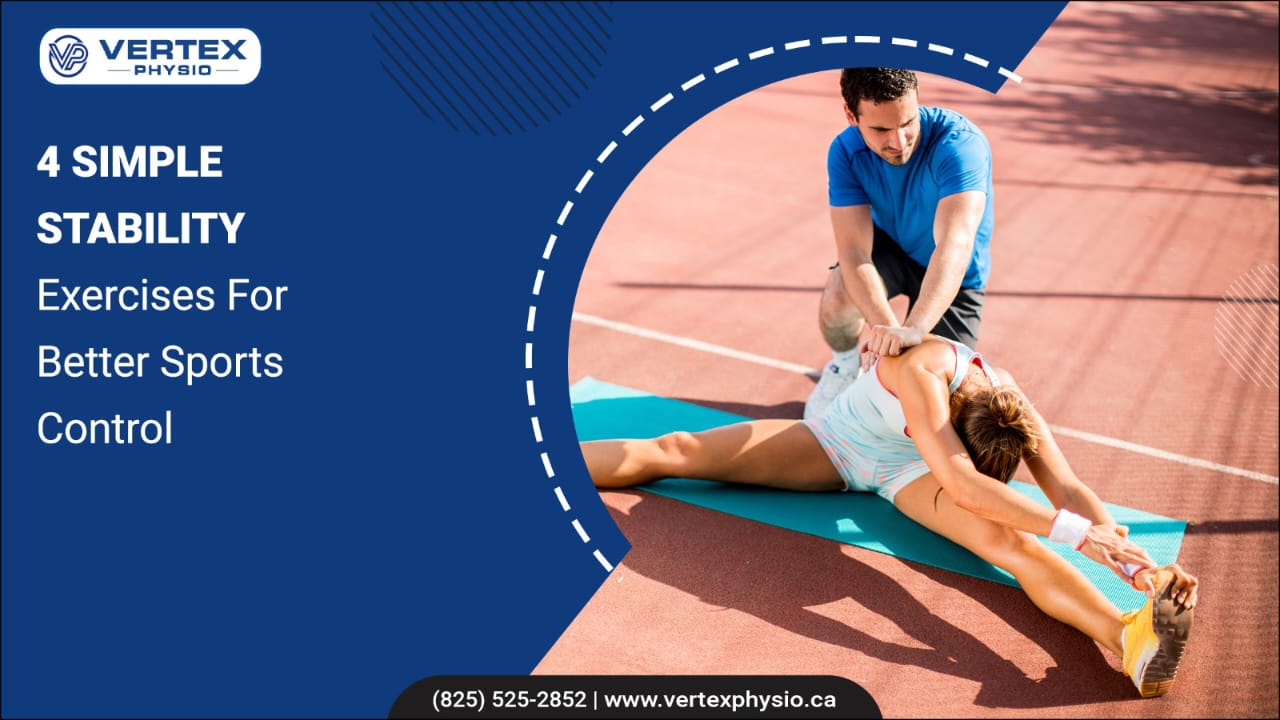
Athletic control doesn’t necessarily derive from strength or endurance alone, but also from stability. From running, jumping, and turning during high-impact movements, body control is essential for performance as well as injury prevention. Developing body control enhances coordination, balance, and agility, helping athletes move efficiently while reducing the risk of strain or injury.
Sports Physiotherapy in Edmonton often incorporates stability training as part of a well-rounded recovery or performance-enhancing routine. For athletes recuperating from ligament sprains, ACL injuries, ankle instability, or postural imbalances, it forms the basis of physiotherapy.
Why Stability Matters in Sports Rehabilitation
Stability exercises train the neuromuscular system to activate key muscles, reducing the risk of falls, missteps, and injuries. By improving postural control, joint alignment, and coordination, they help prevent compensatory movements that increase injury risk, especially in the hips, knees, and ankles.
How Physiotherapy Builds Stability
Sports physiotherapists often use a mix of the following approaches to enhance an athlete’s control:
- Proprioceptive training: Teaches the body to sense movement and position, essential after ligament injuries.
- Dynamic balance exercises: Develop the ability to adjust quickly during movement, often using tools like wobble boards or BOSU balls.
- Core stability workouts: Strengthen the pelvic and spinal support muscles, reducing strain on joints.
- Controlled resistance drills: Help muscles react adequately during rapid changes in direction.
These techniques build a strong foundation for safe, effective movement in Sports Injury Physiotherapy in Edmonton.
Stability Exercises for Sports Control
The training targets deep stabilizing muscles of the core, hips, and ankles that work together to maintain alignment and create a stable base for movement. These exercises emphasize control and proper form over heavy loads to effectively activate key stabilizers.
1. Single-Leg Romanian Deadlift (RDL)
Running, jumping, and cutting are examples of single-leg dominant sports that require hip stability, glute strength, and balance, all of which can be enhanced with the single-leg RDL. It also challenges the proprioceptive system, strengthening the body’s awareness of its position in space.
How to Perform:
- Stand tall with feet hip-width apart. Shift weight onto one leg, keeping a slight bend in the knee.
- Hinge at the hips, allowing the non-standing leg to extend straight back behind the body for counterbalance.
- Keep the back straight and the core engaged. Imagine reaching the arms towards the ground while maintaining a flat back.
- Lower the torso until it is roughly parallel to the ground or until a stretch is felt in the hamstring of the standing leg.
- Return to the starting position by squeezing the glute of the standing leg and driving through the heel.
- Perform 8-12 repetitions per leg for 2-3 sets.
Physiotherapy Focus
Used for ankle and knee injury rehab to improve unilateral balance and glute activation. Often integrated into core stability programs.
2. BOSU Ball Squats
A basic squat becomes a full-body control drill when done on a BOSU ball. The unstable surface forces constant micro-adjustments that improve joint alignment and neuromuscular coordination.
How to Perform
- Place the feet hip-width apart on the flat side of a BOSU ball.
- Slowly lower into a controlled squat, keeping the chest lifted and back straight.
- Maintain even pressure through both feet to ensure balance.
- Engage the core muscles to prevent tipping forward, backward, or sideways.
- Rise back to standing by pressing evenly through both heels.
- Perform 8–12 repetitions for 2–3 sets.
Physiotherapy Focus
Used in proprioceptive training after ankle or ACL injuries, particularly to strengthen joint control under instability and reinforce symmetrical loading patterns.
3. Bird-Dog Extensions
The bird-dog is a foundational core stability exercise that improves balance, strengthens the deep abdominal muscles, and enhances coordination. It is particularly effective for athletes who require spinal stability during dynamic movements, such as runners, swimmers, and those involved in throwing sports.
How to Perform
- Place knees directly beneath hips and hands directly beneath shoulders to begin on all fours. Maintain a neutral spine.
- Engage the core muscles, drawing the navel towards the spine.
- Slowly extend the right arm forward and the left leg backward simultaneously, keeping the torso stable and avoiding any rotation or arching of the lower back.
- Hold for a few seconds, focusing on maintaining balance and control.
- Return to the starting position with control.
- Repeat on the opposite side.
- Perform 8-12 repetitions per side for 2-3 sets.
Physiotherapy Focus
Ideal for core stability programs and used post-sports injury to retrain safe movement across the back and shoulders, while minimizing spinal shear forces.
4. Lateral Bounds with Pause
This plyometric stability drill mimics real-life cutting and landing movements commonly found in sports.
How to Perform
- Beginning in a semi-squat position, place the feet shoulder-width apart, bend the knees slightly, and contract the core.
- Push off with one foot to leap laterally to the opposite side, aiming for a controlled and balanced landing on the other foot.
- Land softly, keeping the knee aligned over the toes and maintaining a stable core.
- Hold the landing for 2–3 seconds to ensure balance and control before initiating the next leap.
- Repeat the movement by leaping to the other side.
- Perform 8–12 repetitions per side for 2–3 sets.
Physiotherapy Focus
Developed for athletes recuperating from lateral ligament sprains or hip difficulties. Improves injury prevention by training the body to control power and maintain balance following rapid movements with more confidence.
Regain Control With the Right Physio Guidance
Stability training plays a foundational role in athletic recovery and performance. From single-leg movements to intensive plyometric drills, these exercises teach the body to move with purpose and precision.
Those undergoing Sports Physiotherapy in Edmonton benefit significantly when stability training is integrated into their care plan. It creates the foundation for safer movement patterns during sports and aids in the healing process from injuries.
Vertex Physiotherapy in Edmonton offers targeted rehabilitation strategies that incorporate dynamic balance, core strengthening, and neuromuscular control to support athletes in their return to peak form. Ready to enhance balance and reduce injury risk? Schedule a physiotherapy session now.
Keywords: Sports Physiotherapy in Edmonton, Stability Exercises, Sports Rehabilitation, Injury Prevention, unilateral balance, Stability Training, Core Stability, proprioceptive training, ACL injuries, ankle instability, risk of injury, Stability workouts, neuromuscular coordination, core strengthening